Structure and Function
Update August 1, 2019
The principal external structures of the mature human female breast are the nipple, areola, and Montgomery tubercles.
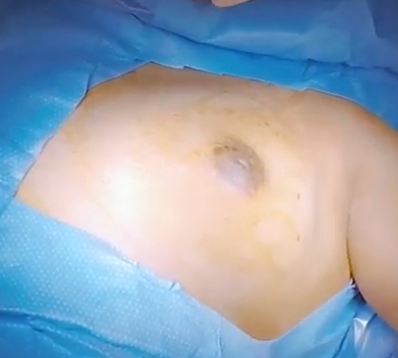
The areola is the darker part of the breast, and the nipple is the central most structure through which milk ducts open and milk is expressed. The areola contains the Montgomery tubercles, through which sebaceous and sweat glands (Montgomery glands) open, producing lubricating substances for the nipple.
Underlying structures include adipose tissue, mammary gland cells, and contractile myoepithelial cells surrounding the gland cells (allowing for milk ejection).
Milk produced within the alveoli is ejected into the milk ducts, which open out directly to the nipple. It was previously assumed that milk was stored in lactiferous sinuses; however, more recent research has revealed that these sinuses do not exist.
Women are able to produce milk when they reach childbearing age.